The Prince by Niccolo Machiavelli [PDF]
by InfoBooks
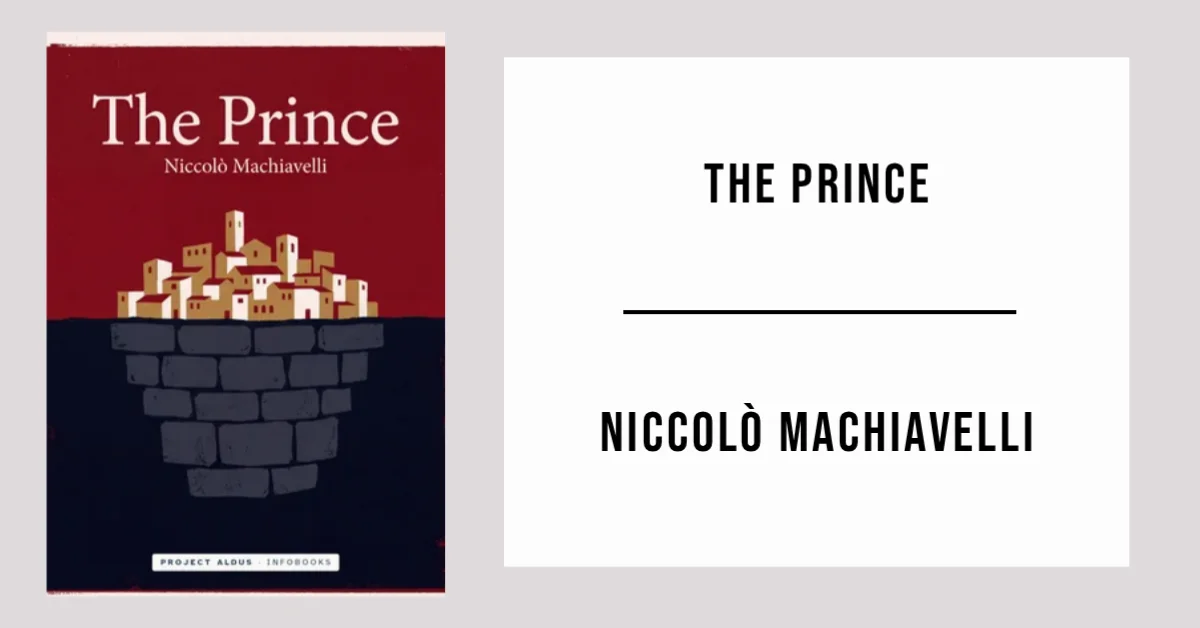
Machiavelli first meant to dedicate The Prince to Giuliano de' Medici, and in the end it went to Lorenzo instead. There is no evidence Lorenzo ever received it, let alone read it, and he never gave its author a job.
This version of The Prince in PDF is our own edition from Project Aldus. The full text, set so you can go straight to a chapter, like the one on whether it is better to be loved or feared, and find it again later.
The download is free and needs no sign-up. One click and you have all twenty-six chapters, plus the two short pieces that close the book.
The Prince by Niccolò Machiavelli
*Please wait a few seconds for the document to load, the time may vary depending on your internet connection. If you prefer, you can download the file by clicking the link below.
Loading PDF...
Information: The Prince
- Author: Niccolò Machiavelli.
- Publication Date: 1532.
- Main Characters:
- Citizens and nobles: Represent society and the various political actors.
- Brief Summary: "The Prince" is a political treatise written by Niccolò Machiavelli in the 16th century. In it, Machiavelli examines the nature of power, analyzes different forms of government, and provides practical advice for a prince to maintain and consolidate their authority. The book addresses topics such as conquest, diplomacy, cruelty, and virtue in politics, and has become an influential work in the field of political science.
- Thematic Analysis: "The Prince" focuses on the exploration of political power and strategies to sustain it. Niccolò Machiavelli argues that a prince is judged by the results of his actions and advocates for political realism, where leaders must be pragmatic and adapt to circumstances to ensure the success of their rule. The book raises questions about ethics and morality in politics, as well as the relationship between power and the stability of the state.
- Historical Context: "The Prince" was written in Italy during the Renaissance, a period of social, political, and cultural changes. Niccolò Machiavelli lived in a time of conflicts between Italian city-states and the influence of foreign powers. The book reflects the context of the time and the need to find effective solutions to maintain power and stability in an unstable and competitive political environment.