Looking for sociology books? This free collection takes you from intro textbooks and sociological theory to religion, education, gender, and city life.
These are the books sociology courses assign, from OpenStax's Introduction to Sociology to the founding works of Max Weber, Émile Durkheim, and W. E. B. Du Bois. Each one shows how institutions, inequality, and social interaction shape everyday life.
Every book is free to read online or download as PDF. If you're new to the field, start with the first section and save the classics for later.
📚
Download every book on this page in one click
Sign in with Google and grab them all without going one by one.
We will redirect you to accounts.google.com to complete sign-in.
Email and name only · We never send spam
Access unlocked
Download every book on this page in one click
Get them all together, without going one by one.
Direct download · One ZIP file
Download started. Check your downloads folder for the ZIP.
Textbooks
Introduction to Sociology Books
These sociology textbooks are the ones students use in their first college course, written by instructors who know where beginners get stuck. They cover culture, socialization, social class, and research methods one chapter at a time.
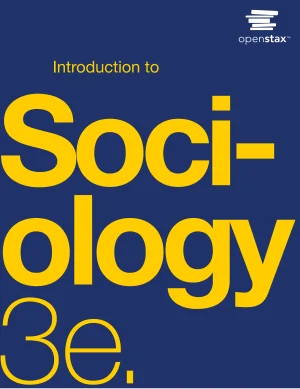
The OpenStax textbook used in thousands of intro courses, covering culture, socialization, deviance, social class, race, gender, family, and religion. Clear chapters, real-world examples, and review questions make it the best place to start.
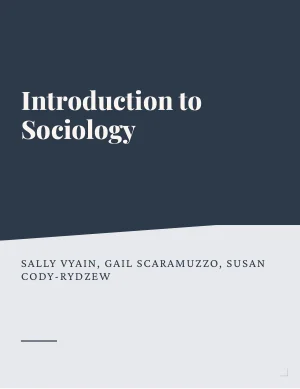
A complete introductory textbook adapted from OpenStax, with chapters on research methods, groups, stratification, and social institutions. Each chapter closes with key terms and summaries that make studying easier.
Sally Vyain, Gail Scaramuzzo, Susan Cody-Rydzewski
A brief introductory textbook built around one idea: understanding society is the first step to changing it. It covers inequality, health, education, and social change with data and student-friendly examples.
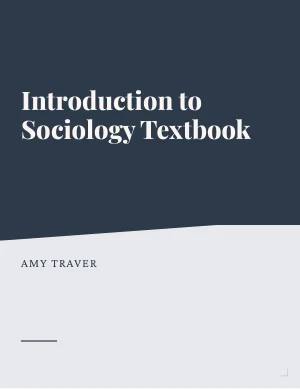
A short open textbook from a college course that explains the sociological imagination, culture, socialization, and inequality in plain language. Ideal if you want the core concepts without a 700-page book.
Lecture notes that introduce the main concepts of sociology, from social structure and groups to culture, deviance, and institutions, written for health science students. A compact overview that links society and health.
Sociological theory starts with a few thinkers who tried to explain modern society while it was being built. Read Auguste Comte, Herbert Spencer, Thorstein Veblen, and W. E. B. Du Bois in their own words.
W. E. B. Du Bois's landmark 1903 essays on race in America, where he introduced the ideas of the color line and double consciousness. A founding text of the sociology of race that still reads with urgency.
Thorstein Veblen's classic study of how the wealthy display status through conspicuous consumption and leisure. The book that gave sociology a lasting vocabulary for class and consumption.
Harriet Martineau's condensed translation of the work where Auguste Comte laid out positivism and the idea of a science of society. Essential reading to see where sociology began.
Herbert Spencer explains why society can be studied scientifically and warns about the biases that cloud our judgment of social life. One of the first books written to define sociology as a discipline.
Charles Horton Cooley's study of how the self is formed through interaction with others, home of the famous looking-glass self. A cornerstone of symbolic interactionism.
The textbook that shaped American sociology for decades, known to Chicago students as the Green Bible. It gathers classic readings on social interaction, competition, conflict, assimilation, and collective behavior.
Gustave Le Bon's influential analysis of how individuals think and act differently once they become part of a crowd. A founding work on collective behavior and mass psychology.
Why do people pray together, and what holds a community together when they do? Émile Durkheim and Max Weber answered those questions in two classics of the sociology of religion, joined here by recent studies on faith and secularization.
Émile Durkheim's masterpiece argues that religion is, at its core, a way for a society to celebrate and renew itself. Built on studies of Australian totemism, it remains the foundation of the sociology of religion.
Max Weber's classic thesis on how Protestant ideas of calling and discipline helped give rise to modern capitalism, in Talcott Parsons's translation. One of the most cited books in the history of sociology.
A clear guide to Max Weber's writings on religion, from the Protestant ethic to his studies of world religions, charisma, and prophecy. Useful for reading Weber with context.
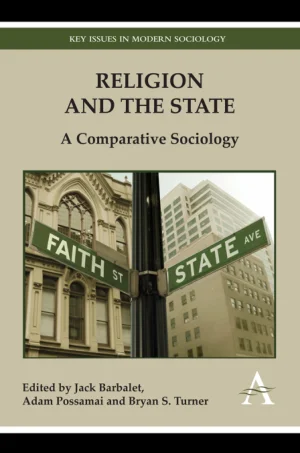
A comparative look at how states regulate, support, or control religion, from the United States to China and the Middle East. Leading sociologists examine secularization, religious freedom, and the politics of faith.
Schools teach more than math and reading. These sociology of education books look at how classrooms and universities reproduce or reduce social inequality.
John Dewey's classic argument that education is a social process and that schools are where democracy is learned. Its chapters on education as a social function still guide teachers and education students.
Carter G. Woodson's sharp critique of how schooling taught Black Americans to accept their own marginalization. A classic of the sociology of education that asks who a curriculum really serves.
Three lectures in which John Dewey connects the school to changes in industry, family, and community life. A short, foundational text on the school as a social institution.
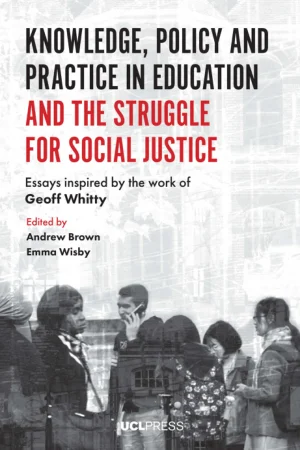
Essays inspired by sociologist Geoff Whitty on how education policy, school choice, and teacher training shape social justice. Recent research on whether schools reduce or reproduce inequality.
Gender looks personal, but sociology shows how much of it is learned, enforced, and negotiated. These books cover gender roles, work, family, and sexuality with data behind every claim.
An open textbook that introduces the key concepts of gender and sexuality studies, from the social construction of gender to intersectionality and feminist movements. Written for first-year college students.
Charlotte Perkins Gilman's 1898 argument that women's economic dependence on men shapes family life, society, and gender roles. A pioneering work in the sociology of gender.
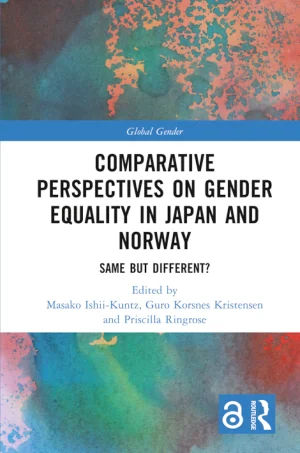
Scholars compare gender equality in Japan and Norway across family, education, media, and sexuality. It shows how culture and policy produce very different outcomes for women and men.
Masako Ishii-Kuntz, Guro Korsnes Kristensen and Priscilla Ringrose
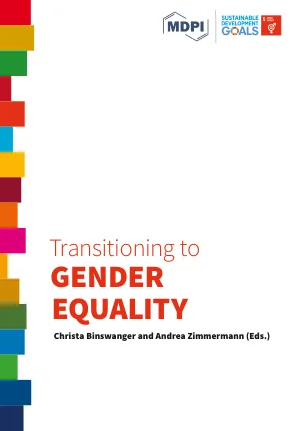
A collection on gender equality as a goal of sustainable development, covering work, care, violence, and political participation. It shows how researchers measure and challenge gender inequality today.
Urban sociology was born in Chicago, where Robert Park and Ernest Burgess treated the city as a living laboratory. Their work sits next to Jacob Riis's New York tenements, Du Bois's study of Black Philadelphia, and new research on segregation.
Jacob Riis's 1890 exposé of life in the tenements of New York, with the photographs that pushed housing reform. A founding document of urban sociology and social documentary.
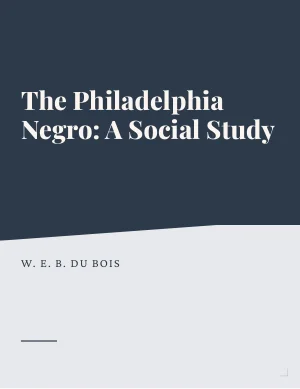
W. E. B. Du Bois's pioneering 1899 field study of Black life in Philadelphia, built on house-to-house surveys. Considered the first great empirical work of American urban sociology.
Jack London went undercover in the East End of London in 1902 to document poverty, housing, and work. A vivid first-person account of urban inequality.
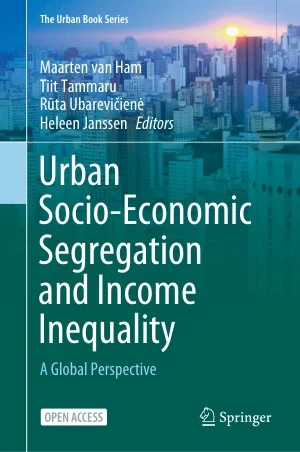
A global study of how income inequality is turning into spatial segregation in cities across six continents. Open-access research for anyone interested in housing, neighborhoods, and inequality.
Maarten van Ham, Tiit Tammaru, Rūta Ubarevičienė and Heleen Janssen
Crime is one of sociology's oldest questions, and criminology grew out of it. These books explain how crime is measured and the main theories of why it happens.
A comprehensive open textbook that maps the whole field, from typologies of crime to biological, psychological, and sociological theories. Chapters on victimology, feminist and green criminology give a current, well-rounded view of how crime is studied today.
A modern textbook that connects the foundations of criminology with how the field is applied today. It moves from how crime is measured to the main theories and the social factors that correlate with criminal behaviour.
A clear briefing that introduces the main biological and sociological theories used to explain why crime happens. A quick, accessible overview of the key ideas behind the causes of crime.
The Scottish Centre for Crime and Justice Research
Send this page to someone who’d love to read it. Everything is free, no sign-up needed.
Esc
Start typing to search...
Searching...
We couldn't find anything
Your book is downloading!
If InfoBooks helped you, you can support us in one click: add us as a preferred source on Google. You'll see more of our books when you search, and you'll help us keep sharing free reading with everyone.
Done! Your book is downloading
Know someone who’d enjoy reading it? Send them this page. It’s free, no sign-up needed, and you help us spread the love of reading.