Earth science books explain how our planet works, from the rocks under your feet to the storms overhead. This collection gathers free books on geology, meteorology, hydrology, volcanoes, oceans and natural disasters.
Every book here comes from universities, research institutes and public agencies like NASA and the USGS. You'll find full introductory textbooks, plus focused guides on plate tectonics, groundwater, earthquakes and soils.
Start with an introductory textbook if you're new to the subject, or jump straight to the branch you need. All of them are free to read online or download, no sign-up needed.
📚
Download every Earth Science book on this page
All the books on this page in one ZIP file, instead of downloading them one by one.
We will redirect you to accounts.google.com to complete sign-in.
Email and name only · We never send spam
Access unlocked
Download every Earth Science book on this page
All the books on this page in one ZIP file, instead of downloading them one by one.
Direct download · One ZIP file
Download started. Check your downloads folder for the ZIP.
Start Here
Introductory Earth Science Books
If you want the big picture of earth science first, start here. These textbooks cover plate tectonics, minerals, geologic time, water, weather and climate in one place.
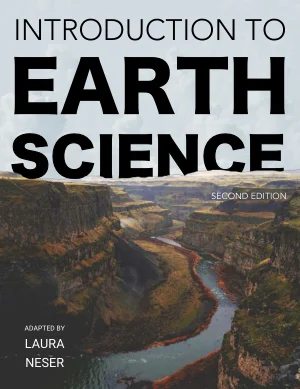
A complete first-year college textbook that covers minerals, rocks, plate tectonics, geologic time, water, weather, climate and the solar system. Packed with color figures, photos and self-check questions for each chapter.
A full high school course in earth science, from mapping and minerals to earthquakes, oceans, weather and space. Clear lessons with review questions and plenty of photos make it ideal for self-study or teaching.
An approachable introduction to earth science for younger students, covering rocks, Earth history, weather, climate, the oceans and natural resources. Short lessons, vivid photos and simple vocabulary make the concepts easy to follow.
Water shapes the surface of the Earth and sustains every ecosystem. Here you'll find guides on groundwater, rivers and how water is measured and managed.
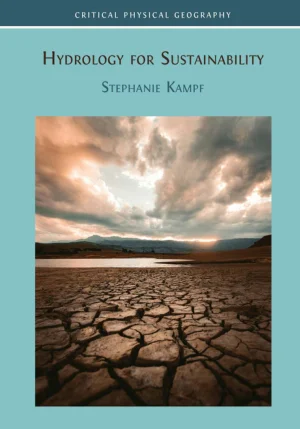
A modern introduction to hydrology that follows water through precipitation, snow, soils, groundwater and rivers, and shows how land use and climate change affect it. Clear figures and real case studies connect the science to water management.
A richly illustrated USGS circular that explains how groundwater, streams, lakes and wetlands are connected and why they must be managed as one resource. Its diagrams of the water cycle are among the clearest available.
Thomas C. Winter, Judson W. Harvey, O. Lehn Franke and William M. Alley
University course notes on hydrology for engineering students, covering the water cycle, precipitation, river basins, runoff and flood analysis. Each topic includes formulas, graphs and worked examples.
Sérgio António Neves Lousada, Rafael Freitas Camacho, Adhonys Alexander Rincon Rodrigues
The classic field manual on measuring water flow in canals, rivers and pipes, with weirs, flumes, meters and current meters explained step by step. Widely used by hydrologists, irrigation managers and technicians.
Geophysics uses physics to see inside the Earth without drilling. These books explain plate tectonics, seismic waves and the methods used to explore the subsurface.
The USGS classic on plate tectonics: how the theory was developed, how plates move, and how they cause earthquakes, volcanoes and mountains. A short, well-illustrated read that is perfect as a first approach.
Concise lecture notes on the main methods of applied geophysics: gravimetry, magnetometry, geoelectrical methods, seismics and well logging. Good for understanding how scientists explore the subsurface without drilling.
Course notes by a leading seismologist on how seismic waves travel through the Earth and what seismograms reveal about its interior. A focused introduction to the physics behind earthquake science.
A lab course guide on using ground-penetrating radar and time domain reflectometry to study soil water, with the theory of electromagnetic waves explained from the ground up. Ideal for hands-on environmental physics.
An IAEA technical report on nuclear techniques for exploring the Earth, from gamma ray logging to mineral and oil exploration. A reference for specialists in geophysics and resource exploration.
Volcanoes build islands, change the climate and put millions of people at risk. These books explain how eruptions work and how scientists monitor them.
A textbook chapter that explains what volcanoes are, the materials they produce, the main volcano types and how eruptions are monitored. Clear photos, diagrams and review questions make it a great starting point.
University lecture notes on magma types, eruption styles and volcanic landforms, from shield volcanoes to calderas. A compact and well-organized review for physical geology students.
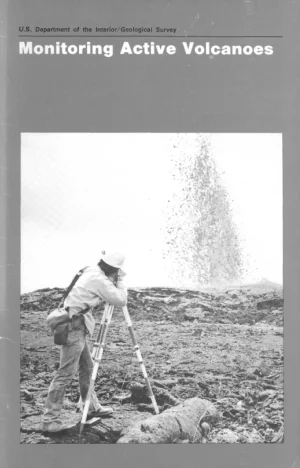
A USGS booklet on how scientists watch volcanoes to forecast eruptions, using ground deformation, earthquakes, gas emissions and other signals. Illustrated with field photos from Kilauea and Mount St. Helens.
Guidelines from the International Volcanic Health Hazard Network on volcanic gases such as sulfur dioxide, carbon dioxide and hydrogen sulfide, with their health effects, safe exposure limits and real cases.
Earthquakes, tsunamis, floods and landslides are Earth processes on a human scale. These books explain why natural hazards happen and how communities reduce their risk.
A complete open textbook that connects physical geography with natural hazards: plate tectonics, earthquakes, volcanoes, mass wasting, floods, severe weather and climate change. Hundreds of maps and photos bring each disaster to life.
An open college textbook on geological hazards, from earthquakes, tsunamis and volcanic eruptions to landslides, subsidence and coastal change. Each chapter pairs the science with real disasters and how communities reduce their risk.
Charlene Estrada, Carolina Londono Michel, Merry Wilson, Jeff Simpson, Mike Santoro and Katherine J. Megivern
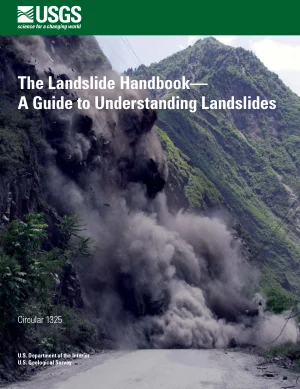
A practical USGS guide to landslides: the types, what triggers them, how to recognize warning signs and what can be done to reduce the damage. Full of photos and diagrams from real events around the world.
An open university textbook on how soils form, their physical and chemical properties, soil water, soil life and classification. Written for a first course in soil science, with clear figures and summaries.
The official USDA handbook on how to describe, sample and map soils in the field, from soil horizons and color to landscapes and soil survey methods. The standard reference for soil scientists and students.
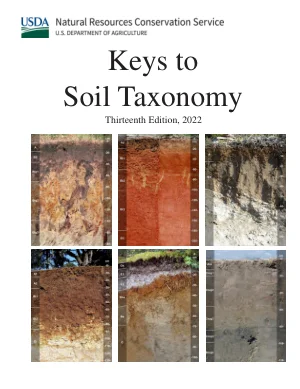
The USDA keys used worldwide to classify soils into orders, suborders and great groups, with diagnostic horizons and properties defined in detail. Its color photos of soil profiles make it a valuable visual reference.
Meteorology is the earth science of the atmosphere, from daily weather to long-term climate change. These books go from the basics of air and clouds to the numerical models behind forecasts.
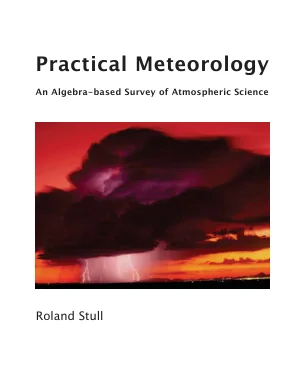
A complete university course on the atmosphere, from radiation, clouds and precipitation to fronts, thunderstorms, hurricanes and weather forecasting. It explains every concept with algebra instead of calculus and includes hundreds of solved examples.
An open university textbook on how Earth's climate works, from the greenhouse effect and the carbon cycle to ice ages and current climate change. Each chapter adds lecture videos and links to explore further.
A peer-reviewed textbook on how weather and climate shape farming, covering radiation, soil temperature, evapotranspiration, crop models and agrometeorological hazards. Useful for students in agronomy, meteorology and environmental science.
Branislava Lalic, Josef Eitzinger, Anna Dalla Marta, Simone Orlandini, Ana Firanj Sremac and Bernhard Pacher
Geology is the backbone of the earth sciences, from rocks and minerals to the history written in them. These three textbooks are a good place for students to begin.
One of the most used open geology textbooks, covering minerals, rocks, plate tectonics, earthquakes, glaciers and geologic time. Clear explanations and abundant photos make it a reliable base for any geology course.
A free college textbook that walks you through the science of geology, from the scientific method and plate tectonics to minerals, rock types, earthquakes, glaciers and Earth history. Well illustrated and easy to follow.
Chris Johnson, Matthew D. Affolter, Paul Inkenbrandt, & Cam Mosher
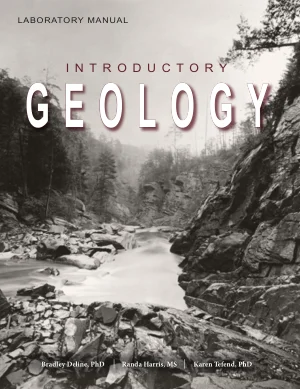
An open textbook for introductory geology courses, covering minerals, igneous, sedimentary and metamorphic rocks, geologic time, structures and surface processes. Includes lab-style activities to practice what you learn.
Comparing Earth with other planets helps explain how our own world formed. These guides from NASA and the European Southern Observatory are a good starting point.
A NASA educational lithograph set with a fact sheet for every planet, moon system, comet and asteroid belt in the solar system. Stunning images and key data make it perfect for classrooms and curious readers.
A NASA report that shows how studying Venus, Mars and other planets helps explain Earth's atmosphere, climate and ozone layer. A short, thought-provoking read on why planetary science matters for our own world.
A press kit from the European Southern Observatory on planets beyond the solar system: how they are detected, what they are like and whether they could host life. Illustrated with striking artist impressions.
Ecology studies how living things interact with the land, water and air around them. These books cover ecosystems, energy flow and how ecology guides conservation.
Lecture notes that introduce the basics of ecology: ecosystems, energy flow, nutrient cycles, populations and communities. Written for health and environmental science students, with clear definitions and examples.
A well-designed guide that turns core ecological concepts, such as disturbance, connectivity and resilience, into practical principles for conserving biodiversity. Useful for students, planners and conservation groups.
An open textbook on using ecology to solve real problems, from conservation management and restoration to pest control and pollution. A practical overview for environmental science students.
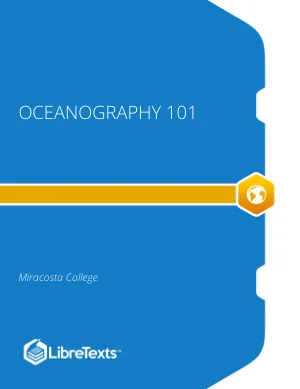
A complete open textbook on the oceans, covering plate tectonics, seafloor sediments, seawater chemistry, currents, waves, tides and marine life. Clear writing and color figures make it an excellent first course.
The widely used university textbook on the physics of the ocean: heat budgets, wind-driven currents, geostrophic flow, waves, tides and ocean models. Free from the author for students and teachers.
An accessible college text that walks through the fundamentals of oceanography, from plate tectonics and seafloor features to waves, tides and ocean circulation. A clear starting point with solid explanations and visuals.
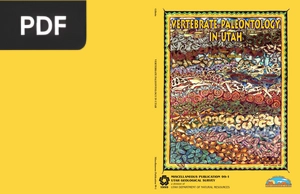
A landmark collection of research papers on the fossil vertebrates of Utah, from dinosaurs and early mammals to Ice Age fauna, with maps, plates and site descriptions. A major reference for paleontologists.
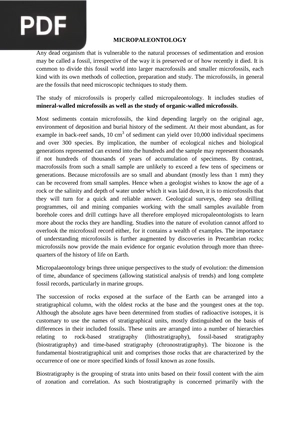
University notes on microfossils, such as foraminifera, radiolarians, ostracods and pollen, and how they are collected and used to date rocks and reconstruct past environments.
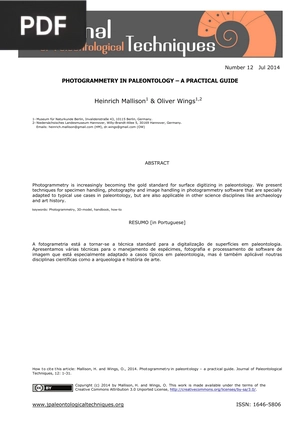
A step-by-step guide to creating accurate 3D models of fossils and dinosaur tracks with ordinary cameras and photogrammetry software. Practical tips that also apply to archaeology and museum work.
These earth science books cover the whole planet, from its core to its atmosphere. Pick one branch, read a chapter, and you'll start seeing the landscape around you differently.
Send this page to someone who’d love to read it. Everything is free, no sign-up needed.
Esc
Start typing to search...
Searching...
We couldn't find anything
Your book is downloading!
If InfoBooks helped you, you can support us in one click: add us as a preferred source on Google. You'll see more of our books when you search, and you'll help us keep sharing free reading with everyone.
Done! Your book is downloading
Know someone who’d enjoy reading it? Send them this page. It’s free, no sign-up needed, and you help us spread the love of reading.