The natural sciences explain everything from the cells in your body to the galaxies overhead. Here you can download 21 natural sciences books in PDF, free and ready to read.
Every title is a complete, openly licensed work written by researchers and educators. You will find foundational texts across biology, chemistry, physics, astronomy, geology, and meteorology.
Pick a discipline below and start reading in seconds. No account and no payment, just open science for everyone.
📚
Download every Natural Science book on this page
All the books on this page in one ZIP file, instead of downloading them one by one.
We will redirect you to accounts.google.com to complete sign-in.
Email and name only · We never send spam
Access unlocked
Download every Natural Science book on this page
All the books on this page in one ZIP file, instead of downloading them one by one.
Direct download · One ZIP file
Download started. Check your downloads folder for the ZIP.
Foundations
Natural Sciences Books
Start here with broad texts that introduce the natural sciences as a whole. These books show how science studies living things, matter, and the planet we share.
A complete Grade 9 natural sciences workbook covering life and living, matter and materials, energy and change, and planet Earth. Clear explanations, full-color visuals, and hands-on activities make core science concepts easy to follow.
An illustrated Grade 5 workbook that introduces natural sciences and technology through life and living, matter and materials, energy, and structures. Friendly characters and activities guide young readers through foundational ideas.
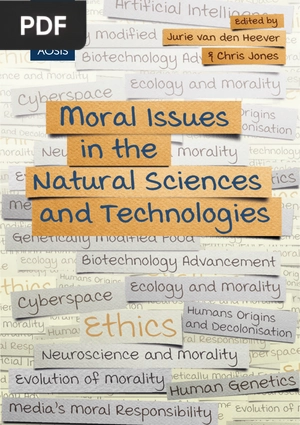
An academic exploration of the ethical questions raised by modern science and technology, from genetic engineering and biotechnology to artificial intelligence and ecology. Scholars examine how moral reasoning applies across the natural sciences.
Biology is the branch of the natural sciences that studies living things, from single cells to entire ecosystems. These books cover how life works at every scale.
A college-level introductory biology textbook covering cell biology, genetics, evolution, biological diversity, and ecology. Designed for non-majors, it pairs clear writing with vivid diagrams and real-world examples.
An adapted introductory biology text with Canadian context and examples, covering cellular processes, genetics, evolution, and ecology. Extensive figures and review questions support self-study.
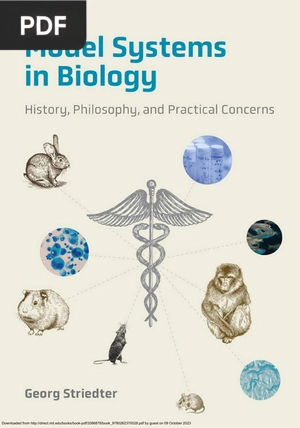
A scholarly look at how biologists use model organisms and conceptual models, examining the history, philosophy, and practical trade-offs behind choosing systems like mice, flies, and cell cultures.
Chemistry is the part of the natural sciences that explains how matter is built and transformed. These books move from atoms and elements to the reactions that shape our world.
A comprehensive organic chemistry textbook covering structure, bonding, reactions, and mechanisms, with a strong focus on understanding why reactions happen. Detailed worked examples and biological applications appear throughout.
A full general chemistry course covering atomic structure, bonding, stoichiometry, thermodynamics, kinetics, and equilibrium. Clear explanations and abundant practice problems make it ideal for first-year students.
A combined two-semester general chemistry resource spanning the full introductory sequence, from atomic theory through chemical equilibrium and electrochemistry. A thorough reference for college science students.
Physics studies the natural sciences at their most fundamental, the laws that govern matter and energy. These books span mechanics, thermodynamics, and the forces that drive the universe.
An algebra-based college physics course covering mechanics, thermodynamics, electricity and magnetism, optics, and modern physics. Real-world applications and clear illustrations support conceptual understanding.
A conceptual introduction to physics that emphasizes scientific reasoning over heavy math. It explores motion, force, energy, and conservation laws through everyday observations and clear photographs.
A calculus-based physics text written for engineering and physical science students, covering conservation laws, mechanics, thermodynamics, electromagnetism, and relativity with an emphasis on physical insight.
A complete introductory astronomy textbook covering the solar system, stars, galaxies, and cosmology. Written for non-science majors, it combines current discoveries with stunning imagery and clear explanations.
A collaboratively written introduction to astronomy covering celestial mechanics, observation, the solar system, stars, and galaxies. A concise primer for readers beginning their study of the night sky.
A curated astronomy reader focused on the solar system and the discovery of planets beyond it. It blends selected open-license text with worksheets and space-telescope imagery for a guided learning experience.
Geology is the branch of the natural sciences devoted to the Earth and how it changes over time. These books cover rocks, minerals, and the forces that shape the planet.
An introductory geology textbook covering minerals, rocks, plate tectonics, geological time, and Earth's surface processes. Richly illustrated with diagrams and photos, it emphasizes how geologists interpret the Earth.
A hands-on lab manual for introductory geology, guiding students through mineral and rock identification, topographic maps, and structural geology with exercises designed to build practical skills.
An edited collection of research on geochemical processes, covering trace elements, isotopic studies, mineral exploration, and the chemistry of rocks and magmas. Aimed at advanced students and researchers.
Meteorology applies the natural sciences to the atmosphere and the climate we live in. These books explain weather patterns, the climate system, and extreme events.
A textbook on how weather and climate shape agriculture, covering radiation, temperature, humidity, wind, evapotranspiration, and climate risk. Practical calculations and worked methods support students in the field.
Branislava Lalic, Josef Eitzinger, Anna Dalla Marta, Simone Orlandini, Ana Firanj Sremac and Bernhard Pacher
An introduction to the numerical modeling of the ocean and atmosphere, presenting partial differential equations, finite-difference schemes, and stability analysis used in climate and weather models.
Kristofer Doos, Peter Lundberg and Aitor Aldama Campino
A broad survey of physical geography and the natural hazards that shape the planet, covering plate tectonics, weather, water systems, and disasters like earthquakes, volcanoes, and storms. Richly illustrated throughout.
An accessible introduction to the science of climate, explaining the climate system, the greenhouse effect, past climate change, and future projections. Clear figures connect physical processes to global impacts.